


Pricing your Altoona home off the wrong comparable can cost you weeks on the market. Your neighbor's house sold for $315,000. A house down the street is listed for $329,000. Which number should you use to price yours? Before we choose either, we'd ask a different question. If a buyer toured your home this afternoon, which of those houses would they have seriously considered buying instead?
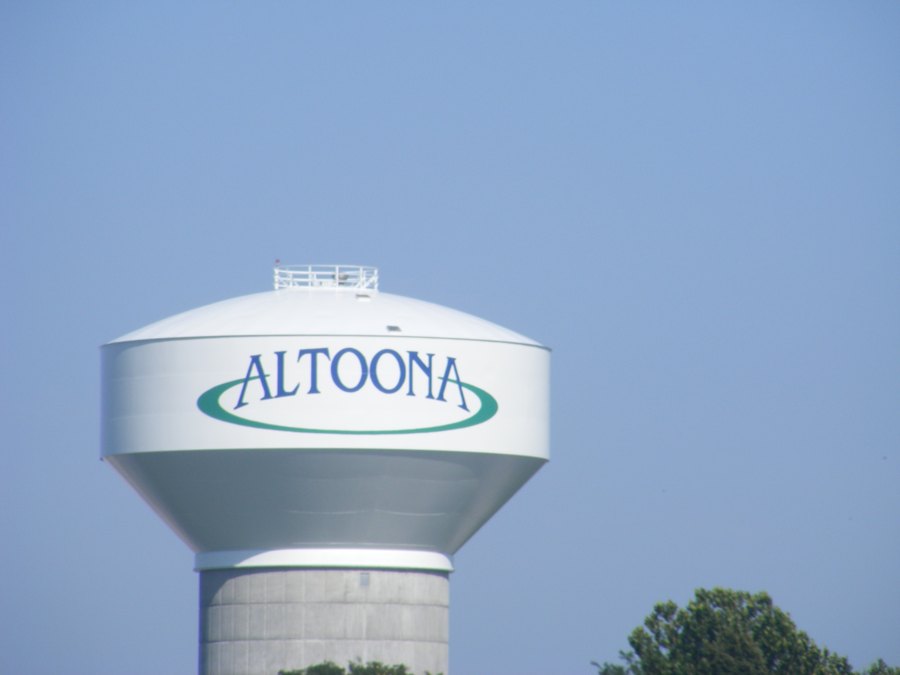
Altoona's water tower, photographed in 2007. Corey Coyle, CC BY 3.0.

Start with what a buyer would put on the same tour
Imagine you're selling an Altoona ranch with three main-floor bedrooms, a two-car garage and an unfinished basement. Write that description across the top of a page. Add the features that affect an ordinary day. Can someone walk straight from the garage into the kitchen? Is there a second bathroom on the main floor? Does the driveway open onto a through street? These details give you a way to sort the search results before the prices start influencing you.
Now pull a handful of nearby sales. Beside each address, finish this sentence: "A buyer considering our house might choose this one because..." If the only thing you can write is "it's close," keep looking. A ranch several blocks away with the same layout may tell you more than the larger two-story next door. Fannie Mae's appraisal guide uses a similar principle when discussing comparable sales, including style, finished area and condition. A listing agent's pricing analysis serves a different purpose, but those are sensible things for a seller to compare. Read the comparable-sales guidance.
What can three different prices actually tell you?
Here's a fictional example. The dollar amounts illustrate how to read a comparison and do not represent recent Altoona sales.
Averaging those numbers gives you about $315,000, which happens to be the price of the better-equipped closed sale. That tidy answer hides two problems. It treats Home C's asking price as money a buyer has agreed to pay, and it gives your unfinished basement the same weight as Home B's finished space. We'd put the most weight on A until we find a reason to do otherwise.
Which differences are worth investigating?
Start with anything that might change the buyer's shortlist. A fourth bedroom below grade may work beautifully as an office, while a buyer who needs three bedrooms on one level may care much more about the floor plan upstairs. Look at photos and floor plans from the time of each sale. Today's description of a house can include work completed after the buyer bought it.
For an update, write down what changed and when. "Kitchen updated" could mean painted cabinets and new hardware, or it could mean moving walls and replacing the plumbing. If one kitchen looks newer, ask what evidence connects that difference to the price. The $15,000 gap between A and B doesn't put a $15,000 price tag on a basement. Several features and the terms of the two deals may have influenced the result.
Read the terms behind the sold price
Suppose Home A closed at $300,000 and the seller agreed to pay $5,000 toward the buyer's closing costs. Record both figures. The recorded price tells you what the home sold for. The credit tells you something about the deal it took to get there. If your goal is to estimate your own proceeds, put the credit on a separate line of your seller estimate. If your goal is to decide what to ask for the house, look for evidence of how buyers responded to similar terms. Subtracting every credit dollar for dollar can give a misleading comparison. Fannie Mae explains how concessions enter an appraisal comparison.
What if the closest match sold months ago?
Keep the older sale on the page and write down its date. Then look for a newer closed sale that shares most of the important features. Which comparison takes more explaining, the older one because of timing or the newer one because of its layout? Ask your agent to walk you through both. A pending listing can tell you that a buyer and seller reached an agreement, but the advertised price alone doesn't tell you the final terms.
Before settling on an asking price, look at the homes a buyer could tour this weekend. If you want to ask as much as Home C, open its photos beside yours. What would make someone choose your house at that price? An answer as specific as a main-floor laundry, a usable workshop or a kitchen that opens directly onto the deck gives you something to evaluate and photograph. If the answer depends entirely on Home C eventually selling for its asking price, revisit the closed sales.
To prepare for a pricing conversation, pick the one sale you think most resembles your home and the one that puzzles you. Send our team both addresses, along with an update or feature that online photos might miss. We can start there and explain which sale deserves more weight. Explore homes for sale in Altoona or use our Central Iowa home selling guide to plan your next step.
Selling nearby in Ankeny instead? Browse current homes for sale in Ankeny, and if buyers are touring without offering, read why Central Iowa homes get showings but no offers.
FAQ
Should I price my Altoona home using an asking price or a sold price?
Sold prices show what buyers actually agreed to pay, so we give them the most weight. Asking prices show the competition a buyer can tour today, which is useful but not final.
Do seller credits change how I read a comparable sale?
Yes. Record the sold price and the credit separately, then look at how buyers responded to similar terms instead of subtracting every credit dollar for dollar.
What if the best comparable sold months ago?
Keep it, note the sale date, and pair it with a newer sale that shares most of the key features. Your agent can walk you through both.
Ready to talk pricing?
Every home is different, and we are happy to look at yours with you. Contact Welcome Home Iowa and we will help you choose the comparable sales that matter most. Hablamos español, too.